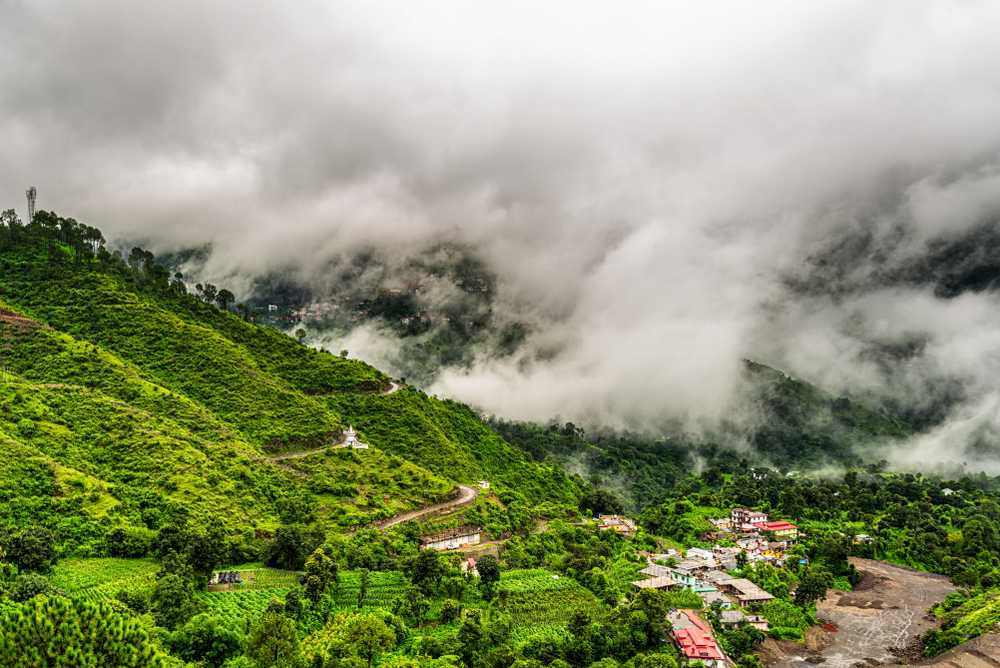
About Solan


  Himachal Pradesh is a northern Indian state in the Himalayas. It's home to scenic mountain towns and resorts such as Dalhousie. Host to the Dalai Lama, Himachal Pradesh has a strong Tibetan presence. This is reflected in its Buddhist temples and monasteries, as well as its vibrant Tibetan New Year celebrations. The region is also well known for its trekking, climbing and skiing areas.

The city has one of the oldest breweries in the country, and also has a 300-year-old fort located at the top of a hill.

The entire State is punctuated with stone as well as wood temples. The shadowy valleys, rugged crags, glaciers and gigantic pines and roaring rivers and exquisite flora and fauna compose the symphony that is for ever Himachal. The State has a rich treasure of places of pilgrimage and of anthropological value


Top Attractions in Himachal Pradesh

Jogini Waterfall. 399.

Spiti Valley. 344.

The Mall. 2,893. Points of Interest & Landmarks.

Hidimba Devi Temple. 3,821. Religious Sites.

Norbulingka Institute. 1,192. Educational sites.

Rohtang Pass. 1,181. Scenic Drives.

Triund Hill. 1,500. Mountains.

Dalai Lama Temple Complex. 1,338. Religious Sites.

From vast tracts of high-altitude Trans-Himalayan desert to dense green deodar forests, from apple orchards to cultivated terraces, from snow capped high Himalayan mountain ranges to snow fed lakes and gushing rivers. Himachal is a nature lover's true delight.

Himachal is in the western Himalayas situated between 30 22′N and 33 12′N latitude and 75 47′E ́ and 79 04′E longitude. Covering an area of 55,673 square kilometres (21,495 sq mi)it is a mountainous state. The Zanskar range runs in the northeastern part of the state and the great Himalayan range run through the eastern and northern parts, while the Dhauladhar and the Pir Panjal ranges of the lesser Himalayas, and their valleys, form much of the core regions. The outer Himalayas, or the Shiwalik range, form southern and western Himachal Pradesh. At 6,816 m, Reo Purgyil is the highest mountain peak in the state of Himachal Pradesh.

The drainage system of Himachal is composed both of rivers and glaciers. Himalayan rivers criss-cross the entire mountain chain. Himachal Pradesh provides water to both the Indus and Ganges basins. The drainage systems of the region are the Chandra Bhaga or the Chenab, the Ravi, the Beas, the Sutlej, and the Yamuna. These rivers are perennial and are fed by snow and rainfall. They are protected by an extensive cover of natural vegetation. Four of the five Punjab rivers flow through the state, three of them originating here.

Due to extreme variation in elevation, great variation occurs in the climatic conditions of Himachal. The climate varies from hot and humid subtropical in the southern tracts to, with more elevation, cold, alpine, and glacial in the northern and eastern mountain ranges. The state's winter capital, Dharamsala receives very heavy rainfall, while areas like Lahaul and Spiti are cold and almost rainless. Broadly, Himachal experiences three seasons: summer, winter, and rainy season. Summer lasts from mid-April till the end of June and most parts become very hot (except in the alpine zone which experiences a mild summer) with the average temperature ranging from 28 to 32 C (82 to 90 F). Winter lasts from late November till mid-March. Snowfall is common in alpine tracts. Pollution is affecting the climate of almost all the states of India. Due to steps taken by governments to prevent pollution, Himachal Pradesh has become the first smoke-free state in India which means cooking in the entire state is free of traditional chulhas.


Contact Us

Electronic, Complex Chambaghat,

Solan - 173213 (H.P.)

+01792-230265/230766

dcdi-solan@dcmsme.gov.in
 

Copyright © MSME DFO SOLAN. All Rights Reserved.